Ipamorelin Research Overview
An overview of ipamorelin, a synthetic growth hormone secretagogue, and its mechanism of action in research.
Scientific background / literature overview only. Discussion of published research does not describe the intended use of Novex Peptide products.
Introduction
> **Research Context Notice** — This article summarises published scientific literature for educational and research-reference purposes only. Discussion of experimental, preclinical or clinical findings does not represent a permitted use of Novex Peptide products. Products supplied by Novex Peptide are intended exclusively for in-vitro laboratory research and are not intended for human or animal administration.
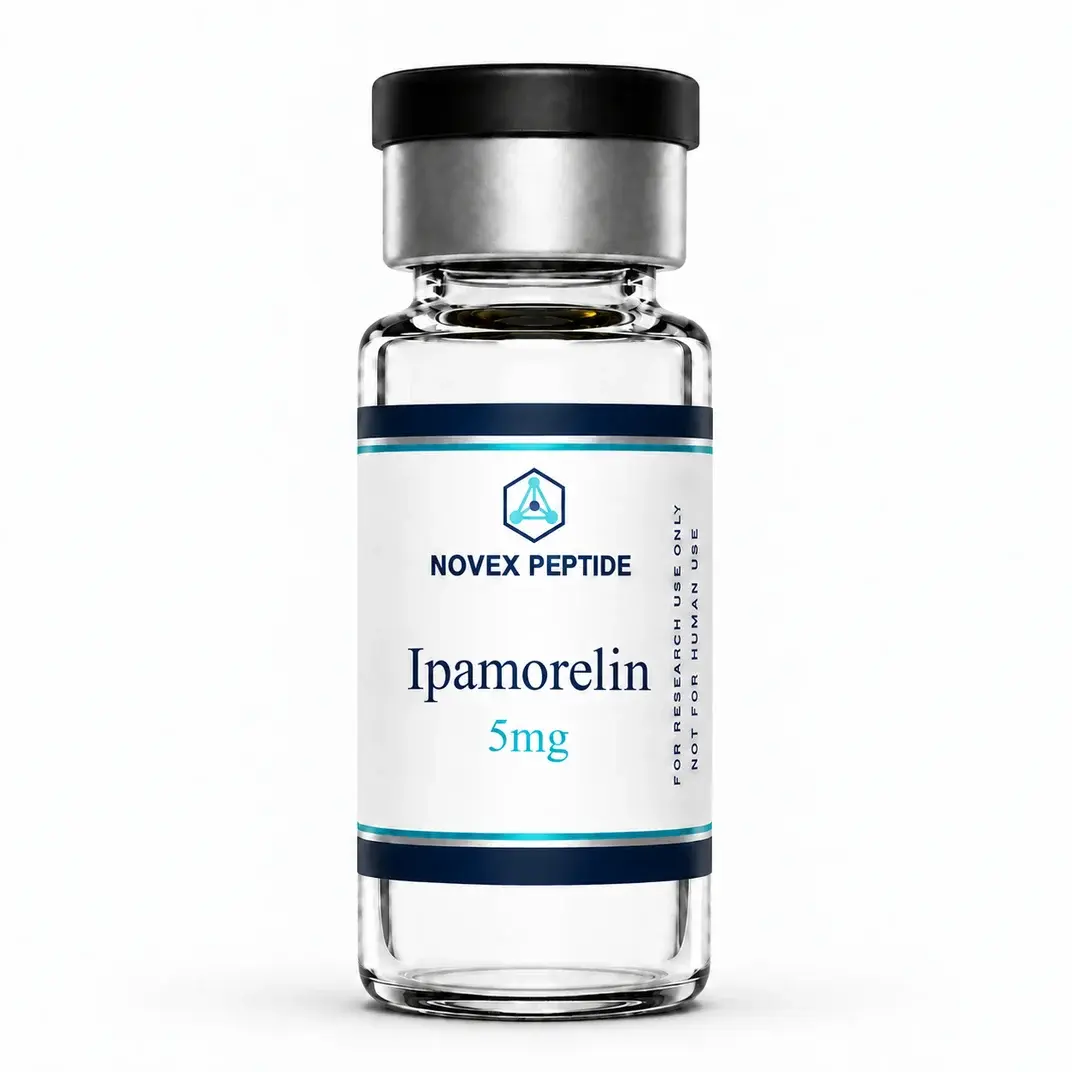
Ipamorelin is a synthetic pentapeptide that functions as a selective growth hormone secretagogue. It stimulates the release of endogenous growth hormone through a mechanism distinct from GHRH analogues, making it a valuable tool in endocrine and metabolic research.
Mechanism of Action
GHS Receptor Agonism
Ipamorelin binds to the growth hormone secretagogue receptor (GHS-R1a, also known as the ghrelin receptor), stimulating growth hormone release from the anterior pituitary.
Selectivity
Unlike earlier secretagogues such as GHRP-6, ipamorelin is noted for its selectivity — it stimulates GH release with minimal effects on ACTH, cortisol, prolactin, or other pituitary hormones in animal studies.
Pulsatile GH Release
Ipamorelin preserves the pulsatile pattern of GH release, which is physiologically relevant for research models.
Current Research
Growth Hormone Research
Animal studies have used ipamorelin to investigate the effects of pulsatile GH release on body composition, bone density, and metabolic parameters.
Combination Research
Research has explored combining ipamorelin with GHRH analogues (such as CJC-1295) to study synergistic effects on GH release.
Gastrointestinal Research
As a ghrelin receptor agonist, ipamorelin has been used in studies investigating ghrelin's role in appetite regulation and gastrointestinal function.
Chemical Properties
Reference values describe the named molecular form in [PubChem](https://pubchem.ncbi.nlm.nih.gov/compound/9831659). Salt, counterion, hydration and formulation may change the mass of supplied material. Confirm the supplied form before quantitative use.
Storage Considerations
Follow the supported product label and compound-specific laboratory protocol. Solution stability depends on the exact material, solvent, concentration and storage conditions; there is no universal refrigerated shelf life or freezing protocol. Obtain missing stability information before preparation. Where validated, use aliquots to minimise repeated freeze-thaw cycles.
Testing Methods
Ipamorelin batches should be verified by:
Research Limitations
Ipamorelin is supplied for in-vitro laboratory research only. Published preclinical literature includes in-vivo animal studies. References to such studies are provided solely as scientific background and do not indicate that Novex Peptide products are supplied for animal administration. No clinical trials have confirmed efficacy in humans for the applications described. No medical, therapeutic, or dosing claims are made. Ipamorelin is not approved for human therapeutic use by any regulatory authority.
References
- 1.Raun K, et al. Ipamorelin, a New GHS. Eur J Endocrinol. 1998;139(5):552-561.
- 2.Bowers CY. Growth Hormone Releasing Peptides. Endocrine. 2018;61(1):8-16.
- 3.Patchett AA, et al. Design of GHS. Proc Natl Acad Sci. 1995;92(15):7001-7005.
Research use only. This article is for educational purposes only and does not constitute advice for any application involving human use. No medical claims are made.